From tiny indie studios in Montréal to 19,000-seat arenas in Toronto, Canada sits firmly among the world's top five gaming markets. Here's why Assassin's Creed, Far Cry, Watch Dogs and hundreds of other blockbusters are born here.
1. Why Canada?
Canada was the quiet giant of the gaming industry for years. Two things changed everything: generous provincial tax credits (Québec covers up to 37.5% of payroll costs) and a deep bench of engineering talent. Today, nearly every AAA project on the planet has Canadian DNA somewhere in its credits.
According to the Entertainment Software Association of Canada, the industry contributes more than CA$5.5 billion to GDP each year, with an average salary of CA$87,000 — 33% above the national average.
2. The hubs: where the magic happens
Montréal
The country's biggest hub. Ubisoft Montréal is the largest game studio in the world, home to Assassin's Creed, Rainbow Six and Far Cry.
Toronto
Home to Ubisoft Toronto, Capybara Games (Below, Grindstone) and dozens of indie teams. The epicentre of Canadian esports.
Vancouver
EA Vancouver (FIFA/FC, NHL), Relic Entertainment (Company of Heroes) and Blackbird Interactive (Homeworld).
Edmonton
The legendary BioWare — Mass Effect, Dragon Age, Baldur's Gate. Alberta is catching up fast to the larger provinces.
3. Esports: a red-and-white boom
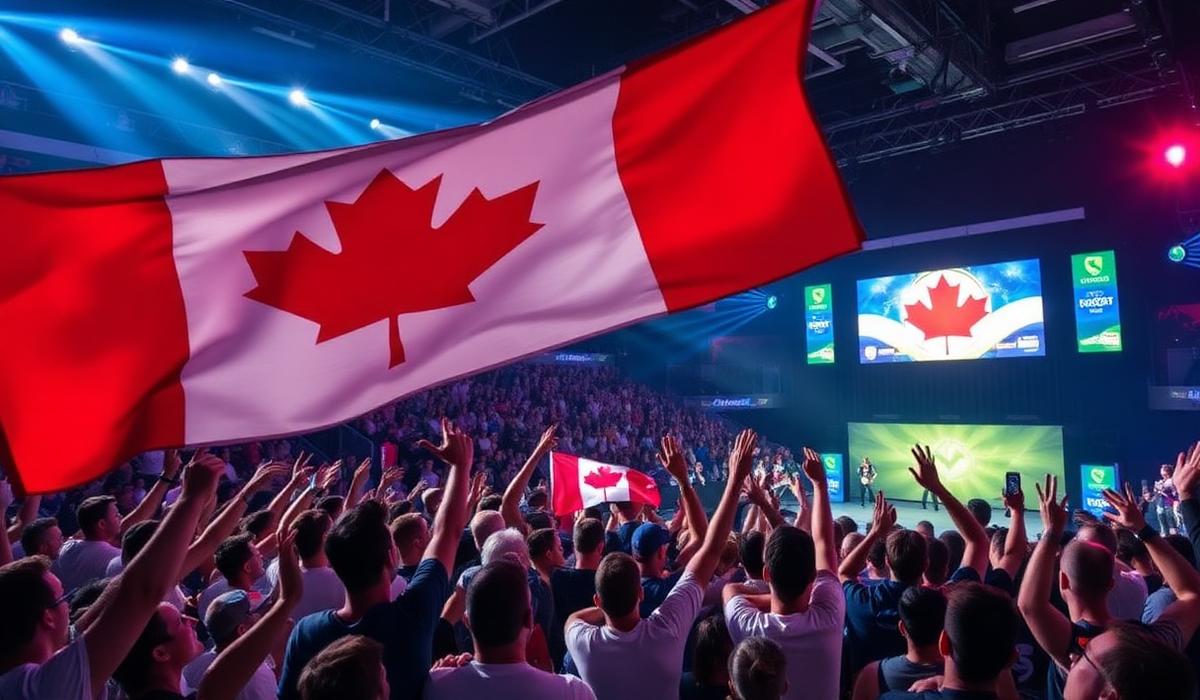
Canada's esports audience surpassed 4.8 million viewers in 2025. Teams like Toronto Defiant (Overwatch League), Sentinels (with Canadian star TenZ on the roster) and Luminosity Gaming regularly land in the global top 10.
Toronto hosts DreamHack Canada every year, and Montréal welcomes the Esports World Cup Qualifiers. Toronto Metropolitan University (formerly Ryerson) was the first in the country to launch a master's program in esports management.
"Canadians play differently — calmer, more tactical, with real respect for the opponent. That's our style, and it works." — TenZ, Sentinels
4. The indie scene: a quiet revolution
Alongside the AAA giants, Canada has cultivated a phenomenal indie scene. Sword & Sworcery, Cuphead (Studio MDHR, Regina), Celeste (Maddy Makes Games, Vancouver), Spiritfarer (Thunder Lotus, Montréal) — all Canadian stories that have won millions of fans worldwide.
Montréal's MEGAMIGS festival and the Toronto Game Jam launch dozens of new studios every year.
5. What do Canadians actually play?
- NHL 26 — a national obsession, especially in Alberta and Manitoba.
- Fortnite, Valorant, Apex Legends — the top picks among 16–25-year-olds.
- Stardew Valley, Animal Crossing — the most popular cosy games for long winters.
- League of Legends — the backbone of university esports leagues.
6. Regulation and loot boxes
Canada is actively debating microtransaction legislation. In 2025, the Senate began studying Bill S-269, which would classify loot boxes as a form of gambling for players under 18. If it passes, Canada will become the second country after Belgium to fully ban such mechanics for minors.
7. What's next: 2026 trends
🤖 AI in game dev
Ubisoft Montréal is already deploying AI-driven NPCs in open worlds. Expect an explosion of generative content.
🥽 XR & Mixed Reality
Vancouver is becoming the epicentre of development for Apple Vision Pro and Meta Quest 4.
🌱 Green gaming
Canadian studios are the first in the world to roll out a carbon-neutral release standard.
🎮 Cloud gaming
Nationwide 5G rollout is finally making GeForce Now and Xbox Cloud Gaming genuinely mainstream.
Conclusion
Canada isn't just a gaming market. It's a factory of global hits, a training ground for esports stars and the birthplace of the warmest indie stories of the last decade. While the rest of the industry is still figuring out where to go next, Canada is quietly building the next generation of games. 🍁